

From quality checks in manufacturing to high-speed object tracking, machine vision lenses, USB3 Cameras, and GigE Cameras are transforming how industries capture, analyse, and interpret visual data. Yet, few people realise just how far this technology has come. Behind every precise scan or automated inspection lies a story of innovation, precision, and invisible teamwork between lenses, sensors, and software.
The Humble Beginning of Machine Vision
Early imaging systems were slow, limited in resolution, and expensive. They could detect defects, but lacked the flexibility to handle complex tasks. Then came the machine vision lens designed for precision-focused imaging sensors. These lenses capture fine details at high speeds, providing consistent clarity even in demanding environments. Over time, as digital technology advanced, vision systems became more compact, efficient, and interconnected.
Today, machine vision has evolved beyond simple inspection. It’s used in everything from autonomous vehicles and robotic surgery to food sorting and semiconductor manufacturing. Every pixel counts, and every frame tells a story of accuracy engineered into action.
Machine Vision Lens: The Eye of Automation
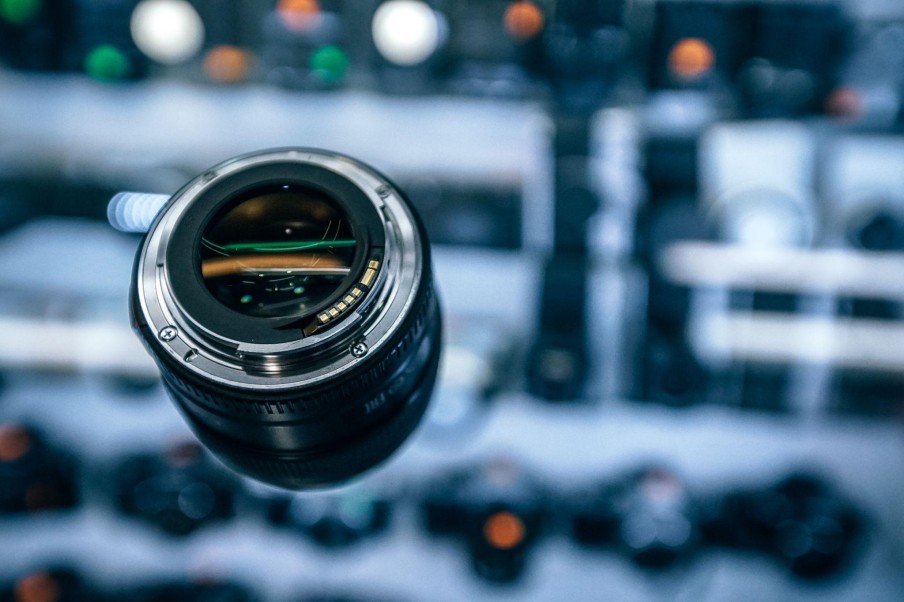
At the heart of every vision system lies the machine vision lens that dictates image quality. These lenses focus on precision and consistency, engineered to minimise distortion, enhance contrast, and handle extreme lighting conditions.
The right lens ensures every captured image is sharp, measurable, and reliable. For instance, telecentric lenses are used in metrology applications where exact measurements are needed without perspective errors. Wide-aperture lenses, meanwhile, excel in low-light or high-speed scenarios.
USB3 Camera: Speed Meets Simplicity
If lenses are the eyes, cameras are the brain behind every machine vision system. Among the most popular today is the USB3 Camera, prized for its balance between speed and convenience. Built on the USB 3.0 interface, these cameras can transfer large amounts of image data at high frame rates that require real-time inspection or motion analysis. They connect easily to computers without the need for specialised hardware, making them both accessible and versatile.
The real beauty of the USB3 Camera lies in its plug-and-play nature. Engineers can integrate them quickly into existing setups, while developers can use standard software drivers for control and image processing. This simplicity, combined with impressive bandwidth, makes USB3 cameras a top choice for research labs, automation lines, and even medical imaging systems.
GigE Camera: The Power of Long-Distance Vision
The GigE Camera, short for Gigabit Ethernet Camera, tells another part of the story. Designed for industrial environments, it offers network-based imaging over long distances without sacrificing performance. Using standard Ethernet cables, these cameras can transmit data over 100 metres while maintaining reliable bandwidth and minimal latency. This makes them perfect for large-scale setups like assembly lines, logistics monitoring, or remote inspections.
The GigE Camera also allows multiple units to be connected across a single network, enabling synchronised imaging from different angles. This is invaluable for 3D scanning or quality control systems where multiple perspectives are needed.
Integration and Calibration
One of the most overlooked parts of the story is how these components work together. A machine vision lens, when paired correctly with a USB3 Camera or GigE Camera, delivers consistent results. Factors like lighting, distance, resolution, and image processing algorithms all influence the final output. Calibration ensures that the captured images match real-world dimensions, which is critical in various applications.
Many assume that once hardware is installed, the job is done. In truth, constant optimisation keeps systems running efficiently. Small adjustments in lens alignment or exposure settings can mean the difference between an accurate scan and a missed defect.
Expanding Horizons
Machine vision isn’t confined to factories anymore. It’s in retail, agriculture, healthcare, and even traffic systems. USB3 and GigE technologies are powering everything from self-checkout cameras to autonomous drones. The applications are endless, and as lenses and cameras continue to evolve, their precision will only deepen.
Interestingly, this growing accessibility has made industrial imaging tools more affordable and customisable. What was once exclusive to large manufacturers is now accessible to small research teams, start-ups, and universities. That democratisation marks a new chapter in the untold story of machine vision.
A Vision Worth Seeing
The world of machine vision may seem hidden behind factory walls, but its impact is everywhere. The partnership between machine vision lenses, USB3 Cameras, and GigE Cameras continues to shape industries, redefine accuracy, and inspire innovation. Understanding how these tools work together is the first step toward harnessing their full potential. Because in the end, the untold story of machine vision is about seeing possibilities where others see pixels.
Curious about professional imaging solutions? Visit Voltrium Systems and explore the full range of machine vision lenses, USB3 Cameras, and GigE Cameras designed for precision imaging today.